
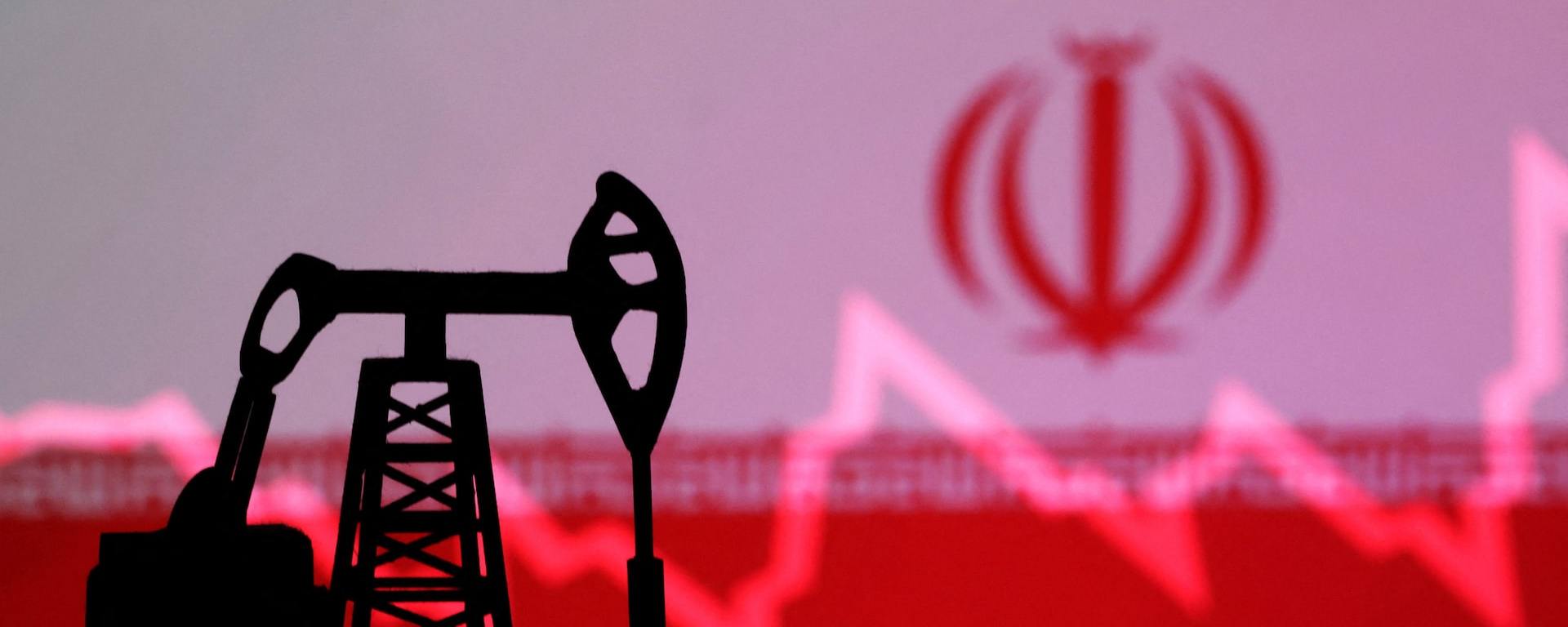
29-08-2026: US Treasury Secretary Scott Bessent has announced “D-Day” sanctions on Iran, after their unprovoked military war was effectively defeated by the Islamic Republic. Washington has decided to switch instead to an economic war even greater than the one Iran has been subjected to for decades. So-called “Operation Economic Outcast” appears to be a strategy for a long regime change siege. However, Iran has sustained decades of US sanctions, and for this latest round of sanctions to have the required effect, the Trump Administration will have to somehow rope in states such as China, Russia, India, Pakistan, Qatar and Türkiye to blockade trade with one of their most important trading partners. Bessent said the US is expanding the category of secondary sanctions to include digital assets, technology, gold, aviation and shipping, and will be the “toughest sanctions in history”.[1] This will only be the case IF Iran’s major trading partners somehow abandon their own interests and follow the lead of the US Treasury.
PRC stands by Iran
The socialistic People’s Republic of China (PRC) immediately put the kybosh on Bessent’s siege, at least from their end. The PRC’s foreign ministry spokesperson Lin Jian stated that trade co-operation between Iran and China has always been conducted within the framework of international law and should not be interfered with or disrupted by third parties.[2] For its part, China has stated many times that it firmly opposes illegal unilateral sanctions. Beijing is a major customer for Iranian oil, as it purchases as much as 90% of its output. The PRC’s oil supplies have been impacted in a big way by the closure of the Strait of Hormuz, which Iran arguably had no choice but to do, in waging an asymmetrical war against the “might” of US imperialism. Iran’s new security chief, Mohsen Rezaei, stated that Iran would retaliate in a “seismic manner” to Trump’s economic warfare. Rezaei warned that that Gulf states that took part in the US sanctions would be considered an enemy and therefore a target for Iran.[3] A long shutdown of the Strait of Hormuz and the Bab El Mandeb strait in the Red Sea by Iran’s Ansar Allah allies in Yemen, would likely adversely affect the US economy, as the US strategic oil reserve on August 14 dropped to its lowest level since 1982, down to 293.4 million barrels of crude oil.[4]
This war waged by the US is in practice the third war it has inflicted upon Iran. The first was the 1980-88 war where Saddam Hussein’s Iraq was pump primed by Washington to invade Iran in an attempt to reverse the 1979 revolution. This momentous uprising threw out the US backed Shah and took back Iran’s natural wealth for its people in the face of US and British imperialism. Whatever errors may have been made, the 1979 revolution was guided by a combination of anti-colonialism and Shia Islam. The second war was the “war of choice” which Washington launched on Iran from February 28 this year. Iran has sustained some damage, not to speak of the assassination of the former Ayatollah and 168 schoolgirls in Minab who were slaughtered on the first day. Despite this, Iran has used its overwhelming stockpile of conventional ballistic missiles to great effect, hitting and/or destroying US military bases surrounding Iran in Bahrain, Kuwait, Jordan and the United Arab Emirates (UAE). The current economic war is the third war, which is an effective attempt at a medieval type siege to bring down Iran.
Fast fading unipolarity
The US Empire is arguably at its weakest point in its history, with its floundering war on Iran a foreign policy fiasco. The stories that have leaked about the horrendous conditions endured by sailors aboard the flagship USS Abraham Lincoln are just one indicator of an ailing former unipolar hegemon. Sailors on the USS Abraham Lincoln endured shortages of toothpaste and deodorant, blocked and malfunctioning toilets and poor quality food, during a 270 day plus deployment. During World War II, the longest deployment by a US warship was only 79 days. The mental health crisis this created for the sailors lead an indeterminate number to attempt suicide by jumping overboard into the Arabian Sea. The US military itself ran short of missiles within a few weeks and was then forced to sign a Memorandum of Understanding (MOU) – which they soon violated. US imperialism is in a far weaker state today than it was in 2003 when it unilaterally invaded Iraq on the basis of fictional “weapons of mass destruction”. The unipolar hegemon, which ruled the planet for 30 years after the collapse of the former Soviet Union, is now in a state of seemingly irreversible decline.
Arguably, the US imperialist wars on Iraq, Afghanistan and Syria were waged as a stepping stone to Tehran. Iraq was almost destroyed, the US was eventually forced to withdraw from Afghanistan after 20 years, and Syria has had ISIS installed into power in December 2024 after a 13-year proxy war. Syria, as part of the Axis of Resistance, had to be taken out before the Pentagon could ready itself for an attack on Iran. Some argue that the US took advantage of an over-stretched Russian Federation to eventually take down Syria via its armed ISIS/Al Qaeda/HTS cutthroats. Russia had intervened at the request of the Syrian Arab Republic in 2015 to counter the US led proxy war. Then, Washington dramatically escalated its proxy war on Russia via Ukraine in 2022, forcing Russia to consolidate its military assets on its border. This was perhaps the Pentagon’s desired end result of the Nazified Maidan coup in Kiev in 2014.
Workers internationally have a vital interest in demanding an end to the war on Iran and the lifting of all sanctions. US imperialist wars overseas are directly linked to the dire cost of living crisis at home, with stagnant wages, and almost unaffordable housing, healthcare and utility bills. The left in the West must urgently abandon notions that Iran should not be vigorously defended due to its alleged “authoritarianism”. Whatever measures Iran takes to defend itself, they pale in comparison with the near elimination of basic democratic rights in the West. For example, in Australia today, the government has passed legislation where the domestic spy agency (ASIO) can now interrogate anyone for 24 hours, including children as young as 14. With no warrant and no lawyer, refusal to answer questions can result in five years jail.[5]
There must be an anti-war movement which firmly opposes the imperialist wars on Iran and Russia and the one being prepared on China. It must have as its aim a defence of the Global South, whatever one’s views on the Eurasian governments. Multipolarity is the bridge over which the working class must cross if it is to achieve serious advances towards socialism. NO WAR ON IRAN! LIFT THE SANCTIONS!
Workers League
www.redfireonline.com
E: workersleague@protonmail.com
[1] www.axios.com/2026/08/24/bessent-dday-iran-secondary-sanctions (26-08-2026)
[2] https://www.msn.com/en-in/news/other/china-says-will-safeguard-own-interests-after-us-vows-iran- (26-08-2026)
[3] www.npr.org/2026/08/24/g-s1-139743/treasury-secretary-scott-bessent-to-unveil-new-economic-sanctions (26-08-2026)
[4] www.en.mehrnews.com/news/247064/US-strategic-oil-reserve-drops-to-lowest-level-since-1982 (26-08-2026)
[5] www.citizensparty.org.au/videos/citizensreport/20260820-citizensreport (26-08-2026)
Image: http://www.reuters.com

