
By Stu Winters
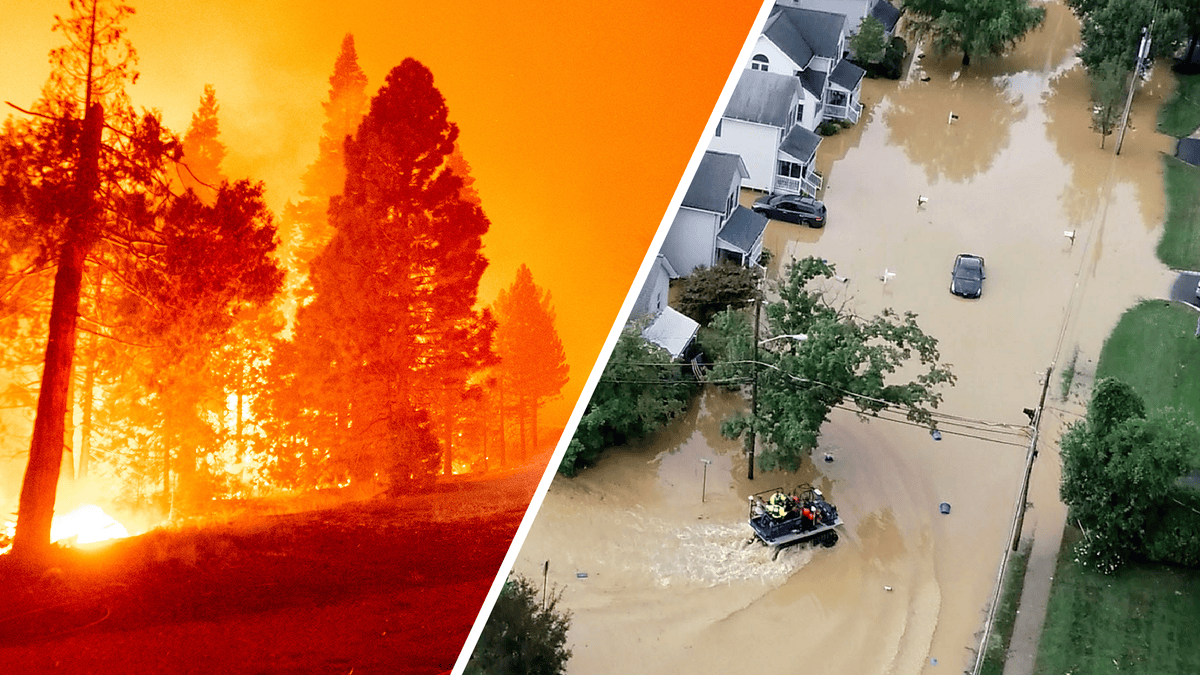
16-11-2026: Although the facts surrounding the anthropogenic rise of average terrestrial temperatures (commonly referred to as “global warming”) have been established beyond rational argument, the ability of climate science to link specific weather events with climate change has been challenging.
However, a new report from the National Academies of Sciences, Engineering, and Medicine makes clear that current capabilities of extreme event attribution (EEA) — a scientific field that analyses whether and to what extent human-caused climate change influenced an individual extreme weather event, such as a specific heat wave or hurricane, has seen advancement.
The scientific tools, observational datasets, and methods developed and used for EEA have advanced considerably over the past decade and have in turn increased the confidence in the linkage of specific weather events with the general climate destabilisation underway.
These advancements in modelling are more notable for some types of weather events, says the report, which evaluates progress made since a 2016 National Academies report on the subject.
The highest confidence is associated with findings for extreme heat and cold events and others strongly influenced by a warming atmosphere, such as large-scale heavy rainfall events.
Confidence in these linkages are less in small-scale dynamic processes such as severe convective storms like thunderstorms and tornadoes.
“Significant progress has been made over the last decade, with major advancements in methods and modelling that allow for more robust assessments of extreme events,” said James Hurrell, chair of the committee that wrote the report, and Scott Presidential Chair of Environmental Science and Engineering at Colorado State University.
Decades of data and research indicate that anthropogenic climate change is altering the frequency and intensity of several types of extreme weather events, such as hurricanes, record-breaking heat waves, and extreme rainfall.
These more recent advancements allow for climate science to move from detecting broad trends towards more specific linkages between climate change/global warming and extrapolating those findings towards individual extreme weather events.
This leads to a better understanding of the role of climate change in local weather events.
EEA modelling studies compare the observed event’s characteristics, such as its likelihood and intensity in the current warming climate, with a hypothesised world without human-caused emissions. This tends to satisfy requirements for “falsification”, which is a part of the scientific method.
Researchers use a combination of observational data, weather and climate models, as well as statistical models to make these comparisons.
The newer tools available for diagnosis of Extreme Event Attribution include radar, satellite, and on-site observations which have expanded in terms of area and length of time covered, resulting in additional data to support EEA analyses applied on a regional basis. The use of larger dataset ensembles of climate model simulations is enabling researchers to more confidently separate the human-caused climate signal from natural variability.
However significant challenges remain especially for events governed by small-scale more localised processes that most global climate models do not simulate, such as severe thunderstorms.
Additionally, in areas of the globe such as the Global South, model limitations and lack of consistent, long-term records affect the capacity of attribution science.
The field of EEIA (Extreme Event Impact Attribution) has potential to advance the understanding of the extent to which extreme weather events are attributable to climate change, the report adds.
A synopsis of the range of actions to further strengthen EEA and EEIA science and their usefulness includes:
- Researchers should develop a common overarching framework with recommended best practices in order to enhance the usability of results.
- Implementation of higher-resolution global climate models would enable a more accurate simulation of intense local storms and regional extreme and would advance EEA into a more robust and regionally relevant science.
- Rapid and reactive EEA studies should conduct periodic peer review to enhance confidence in attribution results.
- Improve the models and data underlying impact attribution, with particular emphasis on regions and hazards that lack reliable tools — especially the Global South.
While this type of climatological research enhancement is welcome it must be stated that without rapid and wide-reaching political change global climate destabilisation will continue even in the face of improved diagnostic methodology provided by EEA research.
Within the framework of contemporary Capitalism, damage to the climate and the earth itself is considered an externality or, to state it more crudely, the “cost of doing business”.
The capitalist system, driven by the relentless pursuit of “profit uber alles”, not only exploits workers but also degrades the ecosystems on which all life depends and is driving humanity and life on earth to ecological collapse.
Humanity must move forward to a fundamentally different form of society which places a premium on the healthy development of individual humans run democratically by the mutual producers, the working class, and does this within a framework of a healthy and thriving ecology.
That is, humanity, in order to ensure its long-term survival on earth, must advance towards socialism.
Full report can be referenced here:
https://www.nationalacademies.org/projects/DELS-BASCPR-23-02/publication/28590
Further information about the committee which published this report:
https://www.nationalacademies.org/projects/DELS-BASCPR-23-02#organizers
Workers League
http://www.redfireonline.com
E: workersleague@protonmail.com

