
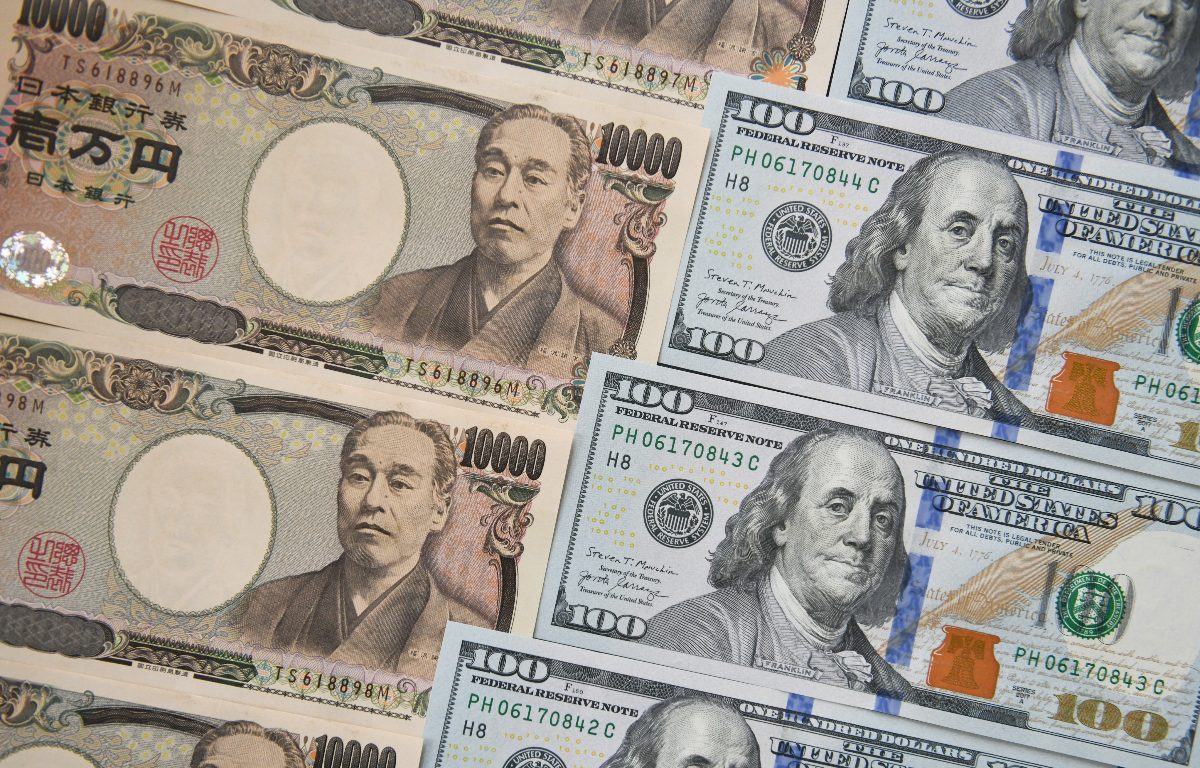
15-08-2026: On Friday the 31st of July US Treasury Secretary Scott Bessant launched an almost unprecedented currency intervention to prop up the Japanese Yen in an effort to forestall a financial meltdown. Even though the US government last year intervened to buy up billions of Argentinian pesos to help prop up its economy and overtly assist Trump ally Javier Milei, this action is something different. While the US and its G7 allies intervened to support the Yen to stabilise markets in 2011, that was in response to Japan’s earthquake and tsunami disaster.[1] The current action by the US government was done unilaterally, and appears to be an open attempt to save the economy of a major imperialist ally. The Japanese Yen was at a 40 year low against the US dollar, and some speculate that this could trigger a fall in financial markets around the world. Even so, the intervention from the US government may not even save the Yen due to adverse financial indicators such as a national debt that is proportionately twice that of the US, rising energy prices, and an aging population.[2]
Tottering system
Some fear that if Japan starts to sell its US, German and British bonds, this could trigger higher interest rates or even hyper-inflation across the West. The Japanese government is under pressure domestically to revive a long ailing economy. After the tremendous boom of the 1980s, Japanese capitalism began a decline in the early 90s and has effectively never recovered. Last November, the Japanese government approved a $135 billion stimulus package that included energy subsidies for cash strapped households.[3] The current currency intervention is the first joint US-Japan action to support the Yen in over 30 years. Japan’s Ministry of Finance, with the support of the US Treasury Department, bought Yen and sold US dollars. Buying Yen increases demand for the Japanese currency. Japan’s heavy dependence on imports has also made the weak Yen more painful as it raises the cost of imported goods and fuels inflation. What is more, Scott Bessant emphasised that the US government “would not hesitate to participate in further joint intervention”.[4]
On top of decades of sluggish economic growth, Japan’s automakers are falling further behind as BYD and other Chinese electric vehicle (EV) manufacturers benefit from socialistic state backing from Beijing. Heads of Japanese corporations such as Toyota have called for Japanese auto manufacturers to unite in the face of overwhelming competition from China’s many EV brands.[5] Since World War II, big Japanese automakers such as Toyota, Honda, Nissan, Mitsubishi and Mazda have been locked in competition to provide well engineered vehicles. But this era could well be ending, as Chinese EV manufacturers not only have economies of scale on their side, but often billions of dollars of subsidies from its central government which is absent in Tokyo. While Japanese auto corporations spent decades competing against each to produce highly engineered vehicles, the internal combustion engine is now rapidly being phased out. What is needed now is not the production of carbon emitting engines, but excellence in user interface and autonomous driving capabilities.[6] The People’s Republic of China (PRC), with its predominantly publicly owned and planned economy, again has advantages of absorbing losses which are otherwise a drain on private corporations competing domestically and internationally. This is one reason why PRC based firms can produce high-quality vehicles at significantly lower prices.
Alternative financial system
The Yen is falling even despite the Japanese government spending billions of dollars trying to limit its decline since 2022. Ironically, the Trump Administration’s bailout of the Yen comes after Trump’s criminal imperialist war on Iran has harmed or blocked energy exports from the Middle East to Asia.[7] This is largely aimed at cutting off energy supplies to Red China but has affected exports to Japan. Also, the practical defeat of US imperialism with its disastrous attempt at regime change in Iran has arguably hammered the final nail in the coffin of the petrodollar.[8] For years, Washington has leveraged the dominance of the US dollar in international trade to exert influence and inflict pain on their perceived enemies and competitors, including Iran and China. However, with Iran’s control of the Strait of Hormuz, Tehran and Beijing have found a tool to boost the Chinese Yuan as an alternative to the greenback. As early as late March this year, after the US began the latest war on February 28, Iran had set a condition that it would allow passage through the Strait for ships carrying oil traded in Yuan.[9]
As if losing another war on top of its ally Japan stumbling economically was not enough, Washington now also has the headache of the rising multipolar world being on the path to the establishment of an alternative to the US dominated financial system, as just one part of the non-imperialist BRICS (Brazil, Russia, India, China, South Africa plus 15 other Global South states) confederation. In early August, it was reported that 40 countries are set to join the launch of BRICS Pay, which could be an alternative to the US led SWIFT system. BRICS Pay is only just getting underway and is not yet a full replacement for SWIFT. However, if more and more countries build the ability to trade without the US dollar, the balance of financial power will inevitably shift from the West to the East.[10] What is more, around 50 years after the US abandoned a gold backed dollar, BRICS is now in the process of offering the BRICS Unit, a gold backed digital settlement token comprised of 40% physical gold and 60% BRICS member currencies.[11]
With developments such as these, we may well see many more US bailouts of Western economies! But this cannot turn the tide of history. The world is transitioning from the old US dominated unipolar world to the rising multipolar world. In a distorted form, this process basically represents the decline and fall of capitalism, and the rise to prominence of socialism. Of course, today, the multipolar alternative is not a socialist path in itself (even with the participation of BRICS members China, Vietnam and Cuba). Yet just by beginning to offer an alternative to the decaying financial tools of Western capitalism, the rising multipolar world has the potential to move towards socialism. To ensure it does so is the task of linked Marxist vanguard parties which the working people of the world must forge as a top priority.
Workers League
www.redfireonline.com
E: workersleague@protonmail.com
[1] www.reuters.com/world/asia-pacific/us-treasury-undertakes-intervention-yen-market-ft-reports-2026-08-01/ (12-08-2026)
[2] www.unz.com/mwhitney/could-the-crashing-yen-trigger-hyperinflation-in-the-u-s/ (12-08-2026)
[3] www.abcnews.com/Business/us-treasury-propping-japanese-yen-experts-explain/story?id=135352201 (12-08-2026)
[4] www.business-standard.com/world-news/us-japan-yen-intervention-currency-falling-sanae-takaichi-trump-bessent-126080300525_1.html (12-08-2026)
[5] https://www.motortimes.com/articles/60311/20260720/toyota-calls-japanese-automakers-unite-against-chinas-growing-automotive-dominance.htm (12-08-2026)
[6] www.asianmorning.com/2026/05/20/toyota-and-honda-accelerate-strategic-alliances-to-counter-chinese-electric-vehicle-dominance/ (12-08-2026)
[7] www.theguardian.com/world/2026/aug/03/trump-japan-currency-yen-explainer (12-08-2026)
[8] www.aljazeera.com/economy/2026/4/8/in-strait-of-hormuz-iran-and-china-take-aim-at-us-dollar-hegemony (12-08-2026)
[9] www.en.sedaily.com/international/2026/03/19/iran-permits-89-ships-through-hormuz-strait-on-yuan-payment (12-08-2026)
[10] www.justice.compclassnotes.com/t/u-s-in-panic-40-countries-join-brics-new-payment-system/600 (12-08-2026)
[11] www.informedclearly.com/en/crypto/49523/brics-unit-gold-backed-token-de-dollarization-2026 (12-08-2026)
Image: http://www.theedgesingapore.com

