
09-09-2024: In mid-August, the Central Bank Governor Elvira Nabiullina confirmed that a staggering 159 countries are ready to adopt the BRICS payment system, which will expand Russia’s SPFS platform, as an alternative to SWIFT.[1] The BRICS alliance is perhaps better described as “BRICS +”, due to the fact that it has expanded beyond the original members of Brazil, Russia, India, China and South Africa to include Iran, Saudi Arabia, Ethiopia, Egypt and the United Arab Emirates (UAE). The SWIFT (Society for Worldwide Interbank Financial Telecommunication) payment system has been administered principally by the US (United States of America) government and its Western allies since 1973. Today, with the political and economic decline of the US and its extensive sanctions on Russia and other supposed adversaries, there is a push for “de-dollarisation”, or the end of the use of the US dollar as the world’s reserve currency. If the BRICS payment system is launched at its next summit in in October, it may accelerate the crumbling of the US dollar and the virtual collapse of SWIFT.
BRICS + still expanding
Even though the BRICS governments announced at the end of June that it would “take a pause” in the admission of new members, many countries from the “Global South” or global majority, are still lining up to join the BRICS bloc, which is offering a much needed political and economic alternative to a stumbling Western led capitalism. Russian Foreign Minister Sergei Lavrov said the BRICS are working on categories of partner countries as a stage ahead of full-fledged membership.[2] This is perhaps a wise move, given the experience of Argentina, which was invited to become a BRICS member, but then pulled out following the election of pro-US right-wing President Javier Milei. Nevertheless, BRICS membership applications from significant regional nations keep pouring in. One day after a visit from Russian President Vladimir Putin, Azerbaijan announced its intention to join BRICS.[3] If this comes to pass, the US will have less access to the Caspian Sea at a time when their Ukraine proxy war against Russia is facing certain defeat. It will also make their efforts to use Armenia as a pro-NATO and pro-EU (European Union) base of operations in the region much more difficult.
Also in June Malaysia confirmed that it had sent a letter of application to Russia as the current chair, to join the BRICS intergovernmental organisation either as a member or a strategic partner.[4] Malaysia is the first nation from South East Asia to do this, but was joined soon after by Thailand, which also submitted a formal request to join the BRICS. It hopes to be accepted at the Kazan Summit in October, but at the same time, it is seeking to join the Western led OECD (Organisation for Economic Co-Operation and Development).[5] Another nation which seeks to balance East and West is Türkiye, yet it has also officially applied to join the BRICS bloc as of September 2.[6] The process of Türkiye joining may be protracted, as all member nations must agree. Nevertheless, if this occurs, it will be the first NATO member to join, further shifting the balance of world power away from the West.
New Development Bank
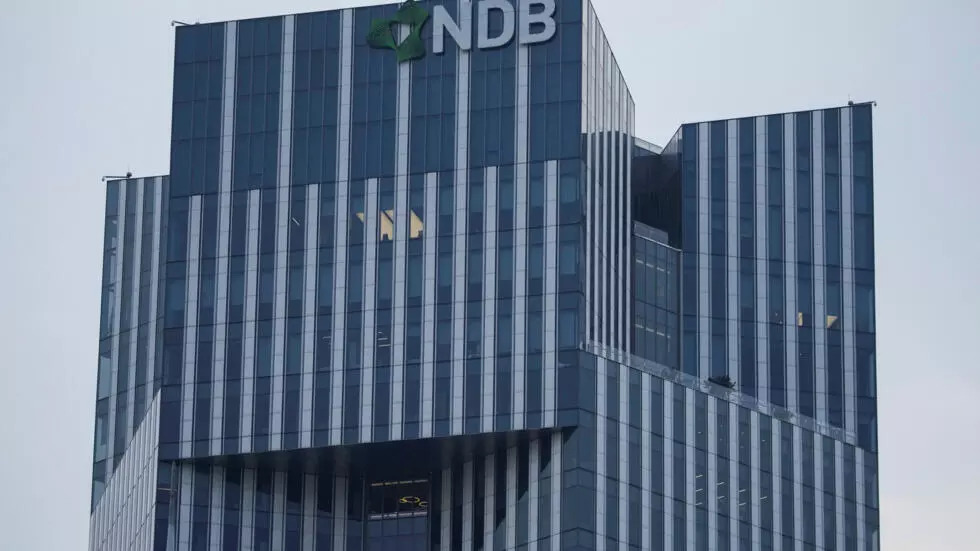
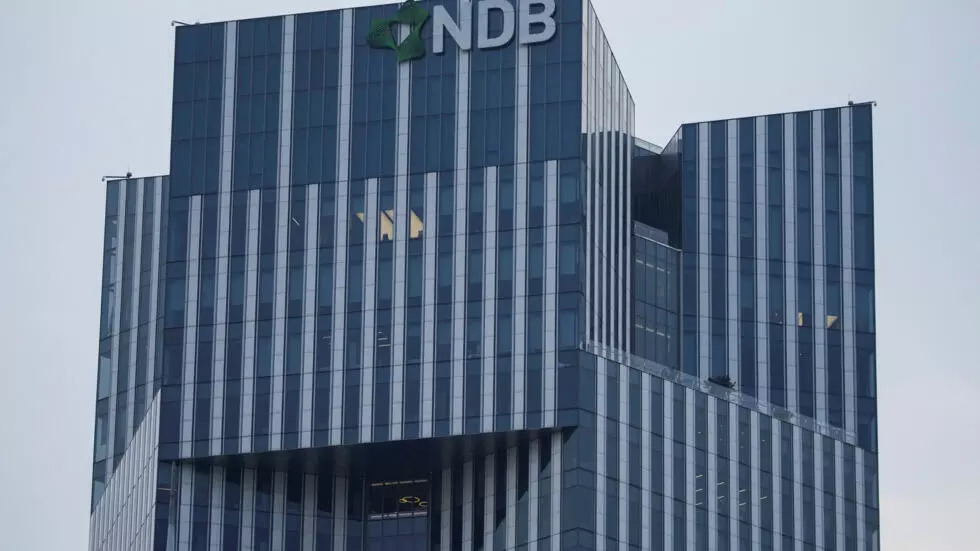
At the same time, the New Development Bank (NDB) is fast becoming the financial arm of the BRICS alliance. Founded in 2015, with its headquarters in Shanghai, the NDB’s main mission is to mobilise resources for projects in developing countries. Algeria, a country which is also seeking full BRICS membership, was approved for NDB membership at the start of September.[7] At the ninth annual meeting of the NDB in Cape Town, South Africa, the NDB approved two major deals for its host. On the 30th of August, the NDB approved a R5 billion loan agreement for the modernisation and improvement of South Africa’s freight rail sector.[8] The day after, the NDB approved a 1 billion dollar loan for the development of water and sanitation infrastructure in the country.[9] South Africa, and many other countries of the “global south”, now have an option to obtain desperately needed infrastructure other than that of approaching the old Western colonial powers. In fact, countries of the global south do not have to be members of the BRICS bloc in order to apply for a loan from the NDB.
What this means is that developing nations no longer have to go cap-in-hand to the old institutions of 20th century financial imperialism, such as the World Bank and the International Monetary Fund (IMF). The strict demands for such nations to privatise their assets and reduce social spending domestically in return for World Bank or IMF “assistance” are notorious. With the rise and expansion of the BRICS, for the first time a viable alternative to centuries of US and European colonialism is on the table. Not surprisingly, many countries of what was formerly known as the “Third World” are flocking to this alternative. The BRICS alliance is a non-imperialist bloc, and therefore it offers development opportunities on a non-exploitative basis. Nations of the global majority can sign deals which are, in the main, mutually beneficial to the donor and the receiver. No more Western capitalist draining of raw materials and wealth to enrich themselves, leaving the host nation in the same situation it was – or worse. While development assistance from the NDB is not given for free, its terms are not onerous, and the links and networks with other BRICS nations can lead to more options.
Working people must grapple with what the rise of the BRICS means for their life outcomes. The BRICS is undoubtedly underpinned by the gargantuan economic, industrial, scientific and technological power of the People’s Republic of China (PRC), a bureaucratically deformed workers’ state. Socialistic rule in the PRC now means that it is surpassing the floundering capitalist economies of the West by any number of metrics. In combination with its allies such as Russia and Iran, it is also presenting itself as a force for peace, against the enormous danger of world war provoked by Western imperialism. While the BRICS governments are not socialist, any move towards socialism today cannot be opposed to the BRICS alliance. At the same time, the political task of forging genuine Marxist vanguard parties remains critical. Despite the aura of gloomy times, objective history is marching forward in favour of the toiling masses. Capitalism had its day long ago, and now a new world beckons.
Workers League
www.redfireonline.com
E: workersleague@protonmail.com
[1] www.tanea.com.au/en/159-countries-poised-to-adopt-brics-new-payment-system/ (04-09-2024)
[2] www.en.mehrnews.com/news/216909/BRICS-to-suspend-admitting-new-members-for-a-while (04-09-2024)
[3] www.politico.eu/article/azerbaijan-brics-summit-europe-south-caucasus-russia-china-india/ (04-09-2024)
[4] www.thestar.com.my/news/nation/2024/07/29/malaysia-applies-to-join-brics-boost-ties-with-russia (04-09-2024)
[5] www.reuters.com/world/asia-pacific/thailand-eyes-brics-membership-october-summit-begins-oecd-application-2024-06-2024 (04-09-2024)
[6] www.middleeastmonitor.com/20240902-turkiye-applies-to-join-brics/ (04-09-2024)
[7] www.rfi.fr/en/africa/20240901-algeria-joins-the-brics-new-development-bank (04-09-2024)
[8] www.ndb.int/news/ndb-signs-r5-billion-loan-agreement-with-transnet-to-improve-and-modernise-south-africas-freight-and-rail-sector/ (04-09-2024)
[9] www.bnnbloomberg.ca/business/2024/08/31/brics-bank-approves-1-billion-loan-for-south-african-water/ (04-09-2024)
Image: The New Development Bank headquarters in Shanghai, China.

