
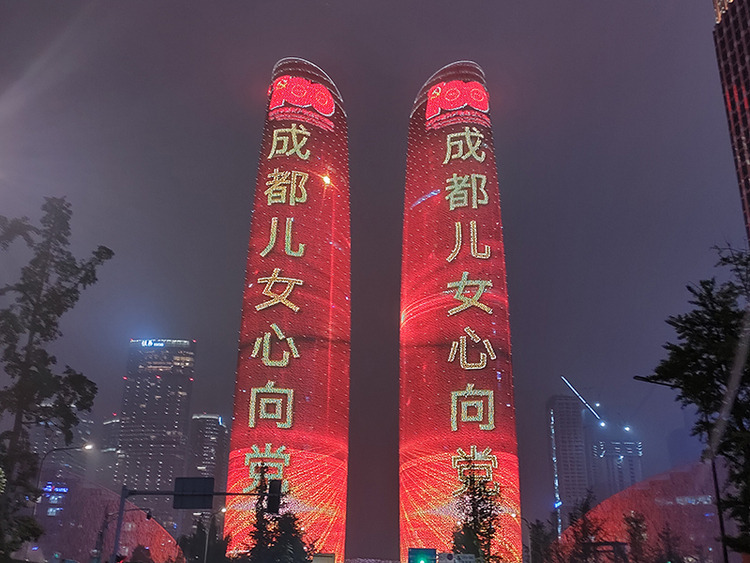
14-03-2026: As the US imperialist war of aggression on the Islamic Republic of Iran rages, significant amounts of oil and gas supplies to the world economy have held up in the Strait of Hormuz, causing shortages and price rises. Iran’s major ally, the People’s Republic of China (PRC), while a major purchaser of Iranian oil, is well on the way to constructing an alternative “electrostate”. An electrostate is based on the central idea that electricity replaces hydrocarbons as the dominant energy carrier. What is more, China’s electrostate is increasingly based on “cleantech” electricity supplies, making a major contribution to decarbonisation and efforts to prevent further climate collapse. In January, the PRC surpassed 10 trillion kWh (kilowatt hours) of total power use for the first time. The figure of 10.4 trillion kWh generated in 2025 is more than double that of the United States of America and exceeds the combined power consumption of the European Union (EU), Russia, India and Japan.[1]
Future tech driving electrification
The vast expansion of electrification in the PRC is largely driven by the parts of the economy which are rapidly growing, such as electric vehicles, digital services and advanced manufacturing with the use of AI (Artificial Intelligence) and robotics. Sectors such as steel and cement are still reliant on fossil fuels, but the “future sectors” are almost all electric.[2] Chinese manufactured electric vehicles (EVs) have taken large parts of the world by storm, with millions being produced for domestic use and export each year. However, the last five years have seen a massive expansion in the production of EVs in the PRC. Just over 50% of new vehicles sold in China today are EVs, which is a huge increase from 2020, where plug-in EVs made up just 6.3% of sales.[3] The PRC is the undisputed leader in EV production, with dozens of EV firms such as BYD, Geely, GWM, SAIC, and Chery taking only a mild challenge from rivals such as Tesla – which largely manufactures its EVs in China. Tesla’s Shanghai factory builds more EVs than its three other factories (California, Texas and Germany) combined.[4]
China is also the world’s leader in high-speed rail construction, with now more than 50 000 kilometres of track[5] spanning the mainland, generating even more demand for electric power. The PRC is producing an abundance of electric power, bringing down the costs of generation. This has given further impetus to its already impressive manufacturing base, with China now producing 80% of the world’s solar panels, 60% of the planet’s wind turbines, 70% of its EVs and 75% of its batteries.[6] Vast and reliable electric power is also needed for the PRC’s robust growth in the robotics sector, which is fuelled by rapid advances in supporting technologies, such as 5G networks, semiconductors, sensors and battery innovation. In absolute terms, China has installed more than half of the world’s robots since 2021, averaging 280 000 units annually.[7] Social media today is awash with videos displaying many Chinese cities at night, with LED coordinated lighting on skyscrapers and bridges producing dazzling images.[8]
The PRC’s tech industries will make further strides forward, as the new five-year plan calls for expanded AI development throughout the economy. The 141-page plan mentions AI 50 times, with a call to “seize the commanding hights of science and technological development”.[9] The aim is to use AI and robotics to boost productivity and performance in a whole range of economic sectors, from manufacturing and logistics to education and healthcare. Plentiful electricity generated by the PRC’s state-run grid will greatly assist further gains in quantum computing and embodied AI – which animates humanoid robots. The PRC stunned the world in February with a display of flawless Kung Fu from humanoid robots at the 2026 Spring Festival Gala.[10] Humanoid robots have the potential to be put to use, taking away the need for humans to fight fires, conduct dangerous tasks or perform back breaking labour. While some may be concerned at the sight of humanoid robots on the streets, the potential benefits remain for all to see.
Workers’ state
China’s electrostate has been made possible by its workers’ state. Hundreds of millions of workers and peasants waged decades of battle to take control of their land, in a socialist revolution which triumphed in 1949. For decades, the PRC struggled to overcome the legacy centuries of dynastic and then colonialist rule during the “century of humiliation”. Yet in the last 30 years, the socialistic PRC has gone from strength to strength, to a position where it is now surpassing capitalism in the West in almost every field – manufacturing, science, technology, robotics, AI, high speed rail, infrastructure construction, aviation, ship building and much more. Nationalised land, public ownership of the major and strategic means of production and a planned economy lays the basis for the past four decades of uninterrupted GDP (Gross Domestic Product) growth, while China’s workers enjoy double digit wage increases, expanding health care and public services, an increasing life expectancy and a very low cost of living.
China’s electrification is a state-run venture, with electricity generation carried out by five large state-owned enterprises (SOEs). The two largest are State Grid (the largest utility company in the world) and China Southern Power Grid. However, all five are managed by the State-Owned Assets Supervision and Administration Commission (SASAC), on behalf of the State Council of the PRC.[11] Needless to say, the electricity grid from generation to distribution to supply, is not run for profit but for the overall benefit of the economy. While working people in the capitalist West pay increasingly expensive utility bills supplied through aging and creaking power lines, working people in China enjoy plentiful and affordable power.
Red China’s advance is intolerable for imperialism, which is the basic cause for the current criminal war of aggression on Iran. Millions can see that the real target is China as well as its allies in the non-imperialist BRICS bloc (Brazil, Russia, India, China, South Africa plus 15 other states including Iran) and the Global South. Capitalism can only resort to war in a vain attempt to slow history’s forward march. Working people must disarm the elites in the West, and surge towards the establishment of states where those who labour hold political decision-making power. It should be acknowledged that the PRC today is saddled with a Stalinist leadership, which must be overcome via a proletarian political revolution. Nevertheless, the PRC’s advanced electrostate provides a glimpse of what might be possible with world socialism.
Workers League
www.redfireonline.com
E: workersleague@protonmail.com
[1] www.gov.cn/archive/statistics/202601/17/content_WS696b548ec6d00ca5f9a08a0e.html (11-03-2026)
[2] www.markhamhislop.substack.com/p/chinas-electricity-system-is-the (11-03-2026)
[3] www.nakedcapitalism.com/2025/05/china-is-on-its-way-to-becoming-worlds-first-electrostate.html (11-03-2026)
[4] www.insideevs.com/news/715427/tesla-ev-production-shanghai-vs-global/ (11-03-2026)
[5] www.travelchinaguide.com/china-trains/high-speed/rail-network.htm (11-03-2026)
[6] www.sightlineclimate.com/research/a-tour-of-chinas-electrostate (11-03-2026)
[7] www.global.chinadaily.com.cn/a/202507/29/WS68883e54a310c26fd717c472.html (11-03-2026)
[8] www.youtube.com/watch?v=toMZt8R1k5s (11-03-2026
[9] www.reuters.com/world/asia-pacific/china-vows-accelerate-technological-self-reliance-ai-push-2026-03-05/ (11-03-2026)
[10] www.techstartups.com/2026/02/16/chinas-humanoid-robots-perform-flawless-kung-fu-at-the-2026-spring-festival-gala/ (11-03-2026)
[11] www.energymap-scu.org/energy-in-china-spotlight/chinas-electricity-sector/ (11-03-2026)
Image: The Twin Towers in Chengdu are illuminated at night, with dazzling displays. http://www.news.cri.cn
 Red Fire